There is a particular pleasure in finding a vintage gold womens watch in a tray of tangled costume jewelry. Maybe the bracelet is worn smooth where somebody’s wrist rested against it for twenty years. Maybe the dial has gone the color of warm cream. You pick it up, turn it over, and begin the small detective story: who made it, when was it worn, and is it worth the asking price?
I have handled enough old watches at The Vault to know that the best examples are not always the shiniest. A little honest wear can give a watch more character than a perfect modern reproduction. The trick is learning which marks tell a story and which ones signal trouble.
What makes a vintage gold womens watch special
A vintage gold womens watch usually refers to a smaller watch made several decades ago, often from the 1920s through the 1980s. The case might be solid gold, gold-filled, gold-plated, or stainless steel with a gold-colored finish. Those distinctions matter. Solid gold is valuable for its metal content, while gold-filled construction uses a bonded layer over a base metal and can remain beautiful for generations.
Look first at the case back. A stamp such as 10K, 14K, or 18K indicates gold purity, though markings can be tiny and worn. Terms like gold filled, rolled gold plate, or plate point to a covering rather than a solid case. A watch marked stainless steel back has a gold-tone case front but a steel rear, which is perfectly respectable when the design and condition are good.
Brand names help, but they are not the whole story. Hamilton, Bulova, Elgin, Longines, Omega, Seiko, and Gruen all produced attractive women’s watches across different eras. A modest Gruen with a lovely dial can be a better buy than a battered luxury name. Every stitch has a story; with watches, every engraving and scratch joins the same conversation.
How to date the case, dial, and bracelet
Dating a vintage gold womens watch takes several clues rather than one magical detail. A rectangular case, geometric numerals, and a narrow bracelet often suggest the Art Deco period of the 1920s or 1930s. Mid-century examples tend to use rounded cases, applied hour markers, and elegant gold-tone stretch bands. The 1970s brought more angular shapes, integrated bracelets, and adventurous dial colors.
The bracelet can be especially revealing. Look for a maker’s stamp on the clasp, a secure hinge, and links that match the case color. A replacement bracelet is not automatically a problem, but it affects collectibility and should be reflected in the price. Original boxes and papers are charming additions, yet a box never makes a nonworking watch valuable by itself.
Dial condition deserves a close look under natural light. Even patina can be attractive when it is evenly distributed. Bubbling, flaking, or dark spots around the edge may indicate moisture damage. Check that the hands are straight, the crystal has no deep crack, and the crown turns without grinding. Never force a crown that feels stuck; an inexpensive inspection can prevent a much larger repair bill.
Buying one at a thrift store or estate sale
When I find a vintage gold womens watch in a thrift case, I use a simple order of operations. First, inspect the markings and photograph the front and back. Next, ask whether the seller knows if it runs and when it was last serviced. Then compare the case, dial, and bracelet for consistency. A watch with a bright new bracelet and a heavily aged case may have been assembled from mismatched parts.
Price depends heavily on brand, materials, condition, and service history. You might see a basic nonworking plated watch for $20 to $60, a clean vintage Bulova or Hamilton for $75 to $250, and a serviced solid-gold model priced considerably higher. Those ranges are useful starting points, not permission to pay a premium for a vague claim that something is “rare.” Search the reference number, inspect comparable sold listings, and ask what evidence supports the price.
A seller should be comfortable discussing condition. If the response is only “it probably works,” treat the piece as nonworking and price it accordingly. Mechanical servicing commonly costs more than a casual thrift-store purchase, so leave room for a watchmaker’s bill that can run from roughly $100 to several hundred dollars depending on the movement and parts.
How to style the watch without looking overdone
A vintage gold womens watch does not require a head-to-toe period outfit. That is where people get nervous, and unnecessarily so. Wear a delicate rectangular watch with a denim jacket, white oxford shirt, and relaxed trousers. Pair a chunkier 1970s design with a knit polo or simple black dress. The contrast between old jewelry and ordinary clothes is what keeps the look alive.
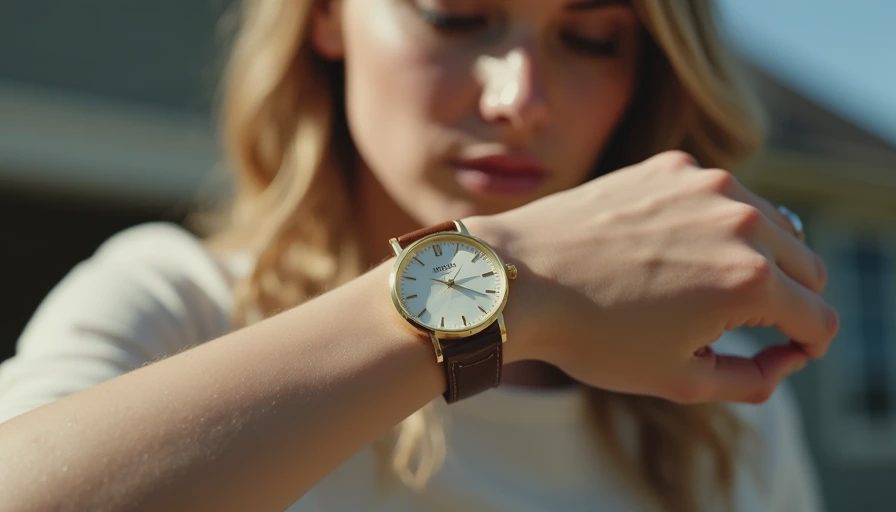
Scale matters more than gender labels. A narrow watch can look intentional on any wrist, while a larger case offers a stronger architectural presence. If the bracelet is too small, a jeweler or watch specialist may be able to add links, but do not stretch a fragile vintage band aggressively. Leather straps are another practical option. Brown leather warms a champagne dial; black leather makes yellow gold feel sharper and more modern.
Keep the rest of the jewelry edited. One signet ring, a slim chain, or small earrings usually gives the watch enough company. I once overpaid for a gold-tone watch because I was distracted by its lovely sunburst dial and ignored the flimsy bracelet. The lesson was not to avoid charm; it was to price the whole object honestly.

Care, repairs, and daily wear
Before wearing a vintage gold womens watch regularly, have the movement checked by a qualified watchmaker. A mechanical watch may need cleaning and lubrication, while a quartz model may simply need a battery and inspection. Do not assume water resistance, even if the case looks tightly sealed. Older gaskets harden, and moisture is one of the quickest ways to damage a dial.
Keep the watch away from showers, swimming pools, perfume, hairspray, and heavy cleaning products. Wipe the case with a soft dry cloth after wearing it, then store it somewhere cool and dry. If the watch has a leather strap, let the strap air out before putting it in a drawer. A small fabric pouch is safer than a loose jewelry box where the crystal can meet a metal bracelet.
Ask for an estimate before approving polishing. Excessive polishing can soften engraved details and remove the crisp edges that help identify an older case. Light cleaning is often enough. A few marks from a previous owner are not damage to erase automatically; they are part of the object’s history.
A practical checklist before you buy
When considering a vintage gold womens watch, confirm the brand, reference markings, case material, and approximate era. Check whether the movement runs, but remember that running is not the same as being serviced. Examine the crystal, dial, hands, crown, clasp, and bracelet links. Look for corrosion, missing stones, loose parts, and evidence of water exposure.
Then ask yourself whether you like the watch even if its resale value stays modest. That question saves money. A beautifully proportioned $45 plated watch that you wear every week can be a better purchase than a $400 name you keep in a drawer. Vintage collecting works best when curiosity leads and investment talk follows at a respectful distance.
Whether you find one in Savannah, at a Midwest estate sale, or through a carefully photographed online listing, slow down before paying. A vintage gold womens watch should feel like an object with a past, not a puzzle someone is rushing you to solve. Look closely, ask plain questions, and let the small details guide you. Every stitch has a story, and every old watch keeps time in its own way.



No letters yet — be the first to write.