The best 1970s vintage denim outfit ideas do not begin with a costume rack or a perfectly matched set. They begin with one good pair of jeans, a jacket with honest wear, or a western shirt whose snaps have seen a few jukeboxes. In the shop, I look for sturdy cloth, useful proportions, and signs that a garment has lived a little. The goal is to dress with the decade's confidence without looking like you are headed to a themed party.
The 1970s gave denim room to stretch beyond workwear. Bell-bottom jeans, trucker jackets, chambray, patch pockets, and dark indigo western shirts all became part of a broader American wardrobe. You can borrow those elements without copying a catalog page. Start with one period-appropriate shape, then let modern shoes, a plain T-shirt, or your own favorite watch bring the outfit back to today.
Start with the right denim silhouette
A 1970s jean usually has more personality in the leg than a contemporary slim pair. Look for a higher rise, a fitted seat, and a leg that opens gradually from the knee. You do not need an extreme bell-bottom. A modest bootcut or flare works beautifully with engineer boots, leather loafers, or simple canvas sneakers.
When shopping, check the fabric before getting distracted by the label. Cone Mills denim, heavyweight cotton, and a firm waistband are good signs, although a lesser-known maker can still produce a wonderful pair. Older zippers from Talon, Scovill, or Gripper & Sons can help date a garment, but hardware is only part of the story. Inspect the inseam, crotch, hem, and pocket bags. A $45 pair with clean repairs is often a better buy than a $150 pair that needs immediate reconstruction.
One of my favorite 1970s vintage denim outfit ideas pairs high-rise medium-wash jeans with a tucked-in thermal and a suede trucker jacket. The contrast works because the denim supplies structure while the knit keeps the look relaxed. Add a narrow leather belt and let the hem brush the top of your boots. That small break looks far more natural than a dramatic puddle around the ankle.

Build an easy denim-on-denim combination
Double denim can look excellent when the two pieces are clearly different. Try a pale chambray shirt over dark indigo jeans, or a faded Type III trucker jacket over black denim. The color separation gives the outfit a visual waistline and keeps it from reading as a matching uniform.
The classic trucker jacket shape is cropped, which makes it especially useful with a higher-rise jean. Look for pointed pocket flaps, metal buttons, and a boxy body that leaves room for a shirt underneath. Levi's is the obvious name, but Lee, Wrangler, Maverick, and smaller regional makers produced plenty of strong examples. A union label inside a vintage jacket is a charming detail, though it should never outweigh condition and fit.
If you prefer a quieter outfit, use a blue denim jacket with ecru or tobacco-colored jeans. Those warm neutrals make the denim feel autumnal and Southern without turning the whole thing into a ranch-wear uniform. Finish with moc-toe boots or brown leather derbies. Of all the 1970s vintage denim outfit ideas, this may be the easiest to wear in regular life because the color story does most of the work.
Try western details without overdoing them
The decade's western influence is useful when applied with restraint. A pearl-snap shirt, pointed collar, or embroidered pocket can carry an entire look. Wearing all three at once is where things start to feel like a stage costume, especially with a cowboy hat and pointed boots added to the same outfit.
For a balanced combination, choose a faded denim shirt, straight-leg jeans, and a patterned cotton neckerchief. Keep the shirt open over a white ribbed tee and roll the sleeves once. The neckerchief should sit loosely rather than tightly knotted; you are aiming for texture, not a uniform. Pendleton, H Bar C, Rockmount, and Wrangler are worth learning, but an unbranded shirt with strong snaps and a clean collar can be just as good.
One useful trick is to match the metal rather than the color. Brass snaps look at home with brown leather and tan suede, while silver hardware works naturally with black boots or a gray sweatshirt. These small relationships make a thrifted outfit feel considered.
Make flares feel current
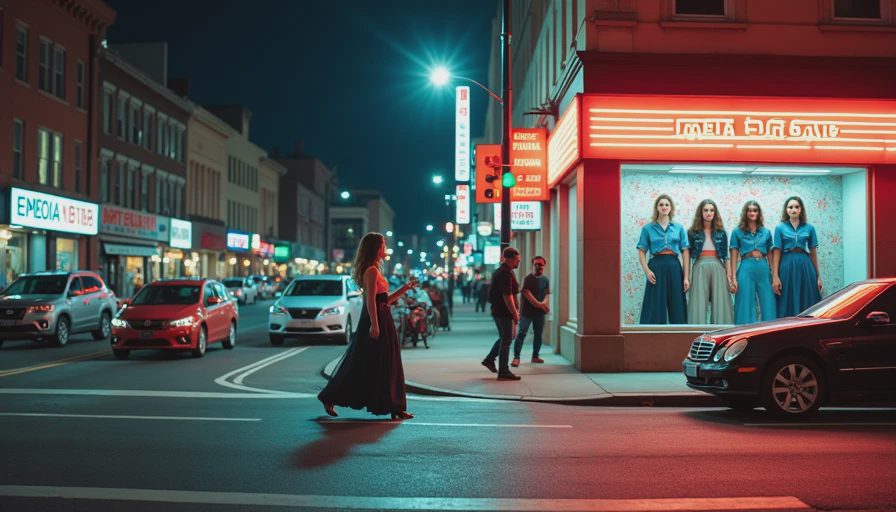
Flares are one of the most recognizable 1970s shapes, so they need a little breathing room around them. Avoid stacking several other loud details on top. A dark flare with a faded band T-shirt and a short chore coat feels intentional. So does a medium-wash pair with a tucked linen shirt and low-profile leather shoes.
Pay attention to the hem. Flares should cover most of the shoe but should not drag across the pavement. If you plan to wear boots with a two-inch heel, bring those boots to the tailor. A good hem preserves the line of the leg. A poor hem can make even excellent denim look borrowed.
For people who do not enjoy a dramatic flare, a vintage bootcut offers the same period reference with less visual volume. It works especially well on a fuller range of body types because the opening balances the shoe without insisting on a single silhouette. The right fit is the one you can sit, walk, and eat barbecue in comfortably.
Add texture through shirts and accessories
Denim needs contrast, and texture is usually more effective than another color. Try a brushed cotton overshirt, waffle-knit henley, corduroy vest, or chunky wool cardigan. Corduroy is particularly useful with blue denim because its ridges catch light differently from the flat twill.
For 1970s vintage denim outfit ideas that work in warm weather, swap the sweater for a cotton camp shirt. A rust, mustard, cream, or muted green print can add period flavor while keeping the denim grounded. In Savannah, where a heavy jacket becomes optimistic by April, I would rather see a lightweight shirt and sturdy jeans than an uncomfortable full costume.
Accessories should look collected, not purchased as a complete package. A narrow belt, old metal-frame sunglasses, a canvas tote, or a simple mechanical watch is enough. I once paid too much for a supposedly rare belt because the buckle looked convincing under shop lights. The leather cracked within a month. The lesson was plain: inspect the thing you will actually wear, not just the story attached to it.
A practical thrift-store fitting checklist
When you find promising denim, put it on before judging the mirror. Check whether the waistband stays level when you sit. Make sure the pockets do not pull across the seat, and inspect both knees for thinning that could become a hole. On jackets, lift your arms and reach forward. Vintage sleeves can be short, and a beautiful jacket is not useful if it pinches every time you grab a steering wheel.
Take measurements home with you: waist, front rise, thigh, knee, hem, and inseam. Tagged sizing changed considerably across decades and brands, so a marked 34 might measure closer to a modern 32. Photograph the tag, zipper, care label, and repairs if you are considering an online purchase.
The strongest 1970s vintage denim outfit ideas leave room for your own life. Wear the jeans with a favorite hoodie on Tuesday, then style the jacket with chinos on Friday. Vintage should not demand that you become someone from an old album cover. It should give your present wardrobe a better story.
Every stitch has a story. Find the piece whose story fits you, wear it hard, and let the next chapter begin.


No letters yet — be the first to write.