The first time I handled a true 1950s womens coats piece, I was standing behind The Vault's counter with a coffee going cold beside me. It was a charcoal wool swing coat, heavy enough to feel reassuring, with a satin lining that had survived more than six decades. The label was nearly gone, but the construction told the story: curved seams, a generous sleeve, and a collar shaped to frame the face rather than fight it. That is the appeal of vintage outerwear. It is not simply old clothing. It is a small piece of design history that still has a job to do.
What defined 1950s womens coats?
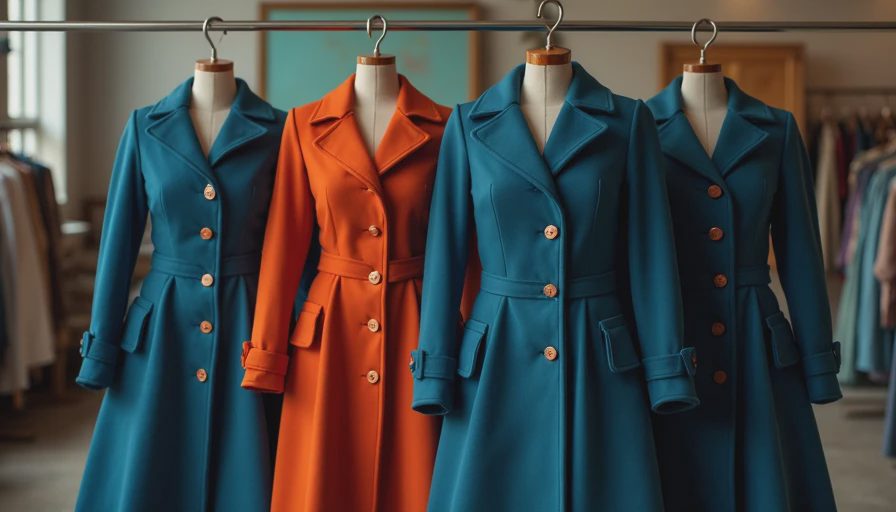
The decade had more than one silhouette. Early 1950s coats often carried forward the practical, structured shape of the 1940s, with defined shoulders, fitted waists, and substantial wool cloth. By the middle of the decade, designers were playing with volume. The swing coat became especially recognizable, falling away from the body in an A-line shape that allowed a sweater or suit jacket underneath. Boxy cocoon coats also appeared, while princess seams gave more tailored styles a sculpted profile.
Look for details that support the era rather than relying on a seller's date. Large covered buttons, leather or Bakelite-style buttons, rounded collars, cuffed sleeves, and clever interior pockets are useful clues. A coat made from a dense melton wool will usually feel compact and warm, not fuzzy and flimsy. Cashmere blends turn up, too, although pure cashmere is less common than modern listings suggest. The label, seam finishing, and zipper or snap hardware should agree with one another.
1950s womens coats were designed to be seen over a complete outfit, so proportion matters. A collar might sit high against the neck, and the hem often landed below the knee. Those features can look wonderfully elegant today, especially with straight-leg denim and a pair of sturdy leather boots.
How to identify an authentic vintage coat
Dating one of these garments is detective work, and the clues are usually inside. Start with the label. Union labels from the International Ladies' Garment Workers' Union can help narrow the period, though a missing label does not automatically make a coat later or less valuable. Department-store names such as Saks Fifth Avenue, Bergdorf Goodman, Lord & Taylor, and Marshall Field's may signal a better retail tier, but the name alone is never proof of quality.
Next, inspect the sewing. Vintage coats commonly have hand-finished details, bound seams, sturdy shoulder construction, and a lining attached with enough ease for movement. Rayon or acetate linings are period-plausible, but they can split at the underarm or sleeve. Check those areas before buying. A metal Talon zipper, if the coat uses one, can be a useful dating clue; so can snaps from makers such as Gripper or United Carr. None of these details should be read in isolation. I have seen newer coats wearing old-looking buttons, and I once paid too much for a supposedly rare wool coat whose best feature was its dramatic label.
The fabric tells another part of the story. Hold the coat toward a window and look for thinning at the elbows, collar, and pocket edges. Small moth nibbles can be repaired, but broad areas of weakness are a different proposition. Smell matters as well. A faint wool or cedar scent is manageable; strong mildew, cigarette smoke, or perfume can be stubborn even after professional cleaning.
Finding the right fit without forcing it
Vintage sizing is not modern sizing, and 1950s womens coats are particularly easy to misread because many were intended to layer over dresses or jackets. Ignore the number on the tag and measure the actual garment. You want pit-to-pit, shoulder width, sleeve length, back length, and hem circumference. Compare those numbers with a coat you already like. This is more reliable than guessing whether an old size 14 translates directly to today's size 14.
The shoulders deserve priority. A tailor can often shorten sleeves, replace buttons, or make a modest adjustment through a side seam. Moving a shoulder line several inches is expensive and can ruin the balance of the coat. Try the garment over the clothes you expect to wear underneath. Raise your arms, sit down, and button it completely. If the lining pulls across the back, the coat is not giving you enough room, no matter how good it looks on the hanger.
A boxy shape should have intentional ease rather than accidental bigness. A swing coat can be roomy through the waist while still fitting neatly at the shoulders. For a more tailored style, look for a clean line from collar to hem and avoid a waist that pinches when you move. Vintage is supposed to accommodate a life, not turn every trip to the mailbox into a period drama.

How to wear the coat now
The easiest modern approach is contrast. Pair a camel swing coat with faded jeans, a gray sweatshirt, and plain leather sneakers. A black fitted coat can handle wide-leg trousers, a tucked knit, and loafers without looking like a costume. If the garment has a dramatic fur-style collar, let that be the loudest element and keep the rest quiet. There is no need to recreate an entire 1950s outfit unless that is genuinely what you enjoy.
Color can make an older silhouette feel current. Oxblood, forest green, mustard, and icy blue appear often enough in vintage racks to be recognizable, but they still work with contemporary neutrals. A scarf adds warmth without changing the shape, while a simple leather bag keeps the look grounded. For a Southern winter, where cold mornings can turn mild by lunch, choose a lined wool coat you can wear open rather than an excessively heavy piece you will carry all day.
Men and women alike can wear the larger swing and cocoon shapes. I have sold oversized vintage coats to customers who wanted something less formal over workwear, and the result was usually better than a traditionally fitted option. The trick is balancing volume: roomy coat, cleaner trousers; broad shoulder, simpler footwear.
Buying, cleaning, and caring for vintage outerwear
Prices for 1950s womens coats range widely. At a thrift store, a damaged or unbranded wool piece might cost $20 to $60. A clean, well-fitting coat from a notable department-store label often lands between $85 and $225 at a vintage shop. Exceptional fabric, rare detailing, or an excellent condition can push the price higher. Pay for condition and construction before paying for a romantic story.
Do not put a vintage wool coat in a home washing machine. Brush off surface dust, empty the pockets, and use a reputable cleaner experienced with older garments. Ask what process they recommend before handing over a coat with a fragile lining or unusual trim. Between wears, give it a day to air out, then store it on a broad wooden or shaped plastic hanger. Thin wire hangers distort shoulders over time.
Keep the coat in a breathable garment bag rather than sealed plastic. Cedar blocks can discourage insects, but they should not touch delicate fabric directly. If you notice moth activity, isolate the piece and inspect nearby woolens. A tailor can replace a lining, reinforce a pocket, or repair a small tear, often for $40 to $150 depending on the work. Those repairs can turn a bargain into a coat you actually wear for years.
The final check before you buy
Before handing over your money, button the coat, inspect every closure, and look inside the sleeves. Confirm that the lining is attached, the seams are stable, and the hem has not been let out unevenly. Measure the garment twice if you are buying online, and ask for photos of the collar, cuffs, underarms, label, and any flaws. Sellers who know their stock should answer directly; vague descriptions deserve a lower offer or a pass.
Most importantly, imagine three outfits you already own. If the coat only works with a hat, gloves, and a perfectly matched vintage dress, it may spend more time in the closet than on your back. The best 1950s womens coats have enough character to make an ordinary outfit memorable but enough practicality to earn regular wear. Find the one with honest fabric, useful room, and a shape that makes you stand a little straighter. Every stitch has a story.



No letters yet — be the first to write.