If you spend much time around vintage mens wrist watches, you start seeing the same pattern: the good ones are rarely the loudest, and the best deal is often the watch that looks a little plain until you flip it over. A scratched acrylic crystal, a faded dial, and a stainless case can still add more character than a brand-new fashion watch ever will. That is why I like these pieces in the first place. They sit on the wrist like a tiny time capsule, and if you buy well, they can be worn hard instead of babied in a drawer.
What Makes Vintage Mens Wrist Watches Worth the Hunt
The appeal is not just nostalgia. A solid old watch was usually built in an era when repair mattered, parts were standardized, and the maker expected the piece to last more than one season. That means you will find hand-wound movements that still tick along after decades, automatics from Seiko and Citizen that reward regular wear, and slim dress watches from Bulova or Hamilton that slide under a cuff without trying to start a conversation. The case, dial, crown, and crystal all tell you something. A little patina is good. Moisture damage, a cracked dial, or a loose crown are not.
Size matters too. A lot of older watches wear smaller than modern buyers expect, and that is usually part of the charm. A 34mm or 36mm case can look right with a work shirt, denim jacket, or navy blazer because it stays proportional. I have seen plenty of men talk themselves out of a beautiful watch because the number on the spec sheet sounded dainty. Then they put it on and realize the watch sits better than the chunky thing they were planning to buy. Good vintage is often more about balance than bigness.
How to Judge Condition Before You Pay
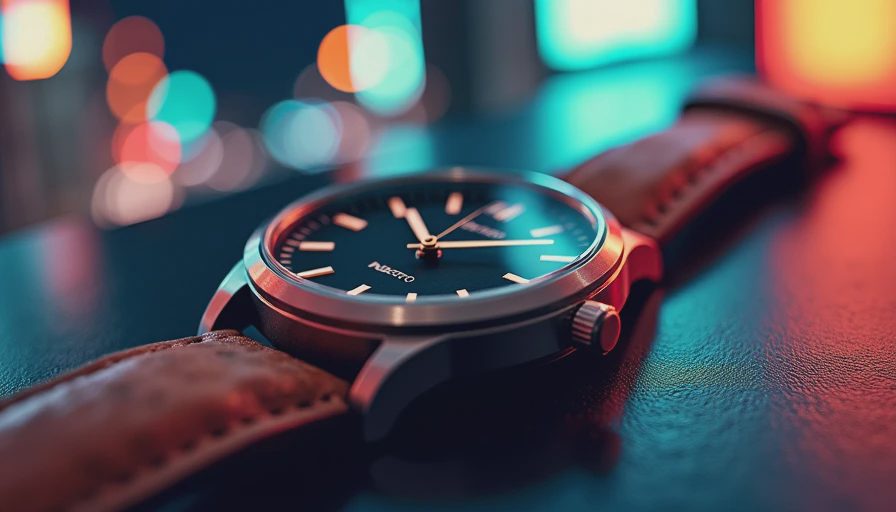
Condition is where a lot of first-time buyers get burned, especially online. Start with the dial. Original printing should look crisp, even if the color has mellowed. Hands should match the style of the dial and not look borrowed from another watch. If the lume has aged to a warm yellow or cream, that can be fine. If it is flaking off like old paint, you are looking at a watch that has lived a hard life. Check the crystal for deep cracks, the crown for smooth winding, and the case back for signs of heavy tool marks from repeated bad opening.
If a seller can show a movement photo, that is a gift. On a mechanical watch, you want to see clean screws, no rust, and no obvious green corrosion around the edges. Ask when it was last serviced. A proper cleaning, oiling, and regulation from a watchmaker can run roughly $150 to $400, sometimes more if parts are scarce. That matters because a cheap watch with a dry movement is not a cheap watch. It is a project wearing a price tag.
Brand Names and Price Bands That Make Sense
There is a sweet spot where the watch is old enough to have soul but common enough that parts and knowledge still exist. Seiko 5 models, Citizen automatics, and Timex Marlins are usually the easiest place to start, and clean examples often land around $50 to $200 depending on condition and originality. Bulova, Benrus, Hamilton, and Elgin dress watches can sit in the $120 to $400 range, especially if the case is gold-filled rather than plated and the dial has not been repainted. Those watches are not glamorous, but they are often honest.
Swiss names can climb much faster. Omega and Longines bring stronger collector interest, and Rolex lives in its own universe entirely. That does not mean you should ignore them. It means you should be skeptical, ask for serial numbers and movement shots, and understand that polish, replacement parts, and service history change the price fast. I once paid too much for a gold-plated Benrus because it looked perfect under flea market shade. The dial was great, the movement was dry, and I essentially paid tuition for a lesson I did not need twice.
Where to Buy Vintage Mens Wrist Watches Without Overpaying
Flea markets, estate sales, local jewelry shops, eBay, and Chrono24 all have their place. The trick is knowing which market you are in and what kind of seller you are dealing with. At a flea market, you are usually paying for your own eye. Online, you are paying for photos, description quality, and return policy. If the listing has clear front and back shots, a movement photo, and an honest note about service, that is worth more than a polished-up headline that says rare and does not explain why.
When I shop for vintage mens wrist watches, I like to ask the same three questions every time: Does it run? Has it been serviced? Are the parts original? If the seller cannot answer the service question, assume you are buying the watch plus a repair bill. That does not kill the deal, but it changes the math. I would rather pay $60 for a clean, unknown Seiko than $140 for a shiny mystery piece with a tired movement and a brand-new bracelet trying to distract me.
How to Wear and Care for Them in Real Life
The nicest thing about a good vintage watch is that it does not need to sit in a box waiting for a special occasion. Swap straps to change the mood. A brown leather strap softens a dress watch and makes it feel lived-in. A black strap can sharpen a simple steel case. Even a nylon strap can work if the watch has the right proportions. The point is to wear the thing, not preserve it like a museum label.
Keep older watches away from showers, pools, and hard impacts. Water resistance on a decades-old watch is not something to trust just because the case back screws down. Magnetism is another quiet problem; speakers, bags with magnetic clasps, and some laptop cases can throw off timekeeping. A watchmaker can demagnetize a movement in seconds, which is one more reason to keep a trusted repair shop in your corner. For most mechanical pieces, a service every three to five years is a sensible rhythm, especially if you wear it often.
The Short Version From My Counter
If you're serious about vintage mens wrist watches, buy the condition you can verify, not the story you wish were true. A humble Seiko with a clean dial and a fresh service will usually bring more daily joy than a polished-up mystery watch with a famous name and no paperwork. Ask for movement photos, budget for maintenance, and let the watch earn its place on your wrist. Every stitch has a story, and every good watch does too.



No letters yet — be the first to write.