At a good flea market, the best rack usually looks a little tired. That is where the soft cotton, cracked ink, and old union tags live, and that is why vintage t shirts for guys still have such pull. When I sort through them at The Vault, I start with the story before I start with the size. A tee printed for a roadside concert in 1987 or a work shirt from a forgotten mill has more personality than anything fresh off the press. Every stitch has a story, and a lot of those stories are worth $20, $40, or a whole lot more.
What the fabric tells you first
The fabric gives away more than most shoppers realize. A good old tee usually feels dry and substantial, not papery. The best ones often started as 100 percent cotton jersey, then softened through decades of washing. Single-stitch hems on the sleeves and bottom are a strong clue you are looking at an older garment, though some later blanks used them too. A tubular body, where there is no side seam, is another useful hint. If the collar is still snug and the knit has not gone thin around the neckline, that shirt has probably already done the hard work of breaking in.
Print quality matters too. Plastisol graphics from the late 70s and 80s can crack in a good way, while a modern repro often sits too flat and too even. I like a little honest wear, but I pass on shirts with mildew smells, mystery stains in the armpits, or fabric that has gone sheer across the belly. For vintage t shirts for guys, the sweet spot is usually a shirt that feels lived in, not worn out. At thrift prices, that might mean $12 to $35. At a curated shop or online, a clean band tee can jump into the $60 to $150 range quickly.
Tags, brands, and era clues
Tags are where the detective work gets easier. Screen Stars, Hanes, Fruit of the Loom, Velva Sheen, Anvil, Tultex, and Brockum all tell different parts of the story depending on the decade. A small, faded union label can point to older American production, and an RN number can help you look up the company history. Made in USA is a useful clue, but it is not a magic stamp by itself. I care more about the full picture: tag shape, print hand, stitching, and how the cotton has aged.
When I sort vintage t shirts for guys, I look for honest construction before I get starry-eyed about the graphic. A 1970s tee with a deadstock tag can still shrink a little in the wash, while a 1990s concert shirt on a Brockum or Giant tag may already have the boxy fit most people want now. Repros are fine when they are clear about what they are. What I skip are fake aging tricks, sloppy screen prints, and shirts that try too hard to look old without actually earning it.
Fit without the costume effect
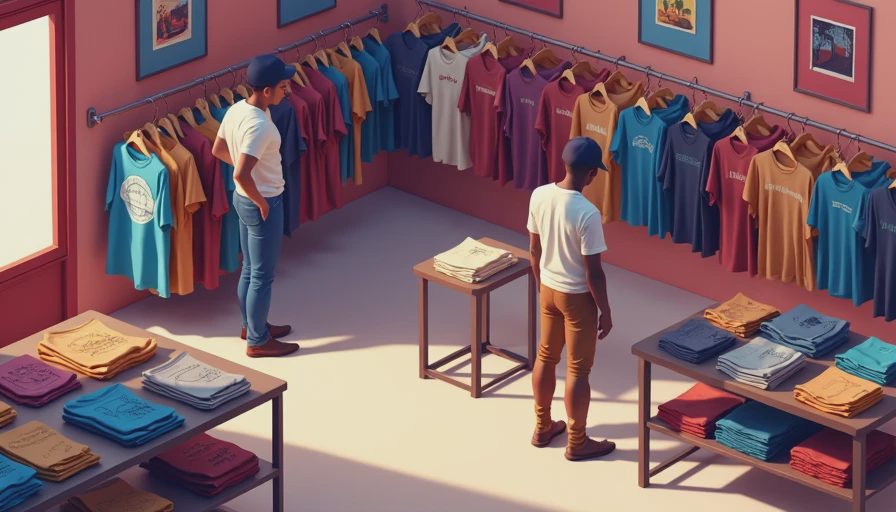
For vintage t shirts for guys, fit starts at the shoulders and ends at the hem. If the shoulder seam lands close to the edge of your shoulder, you are in business. If the shirt is too short, it can look cropped in a bad way; too long, and it starts to read like a sleep shirt. Most older tees fit trimmer in the chest and shorter in the body than modern mall basics, so the right size is often one size up from what you wear in a fresh Hanes pack.
I usually tell people to try the shirt with the clothes they actually wear. Under a chore jacket, a faded tee can look sharp and easy. With straight-leg jeans and boots, a slightly boxy body works better than something clingy. If the graphic is loud, keep the rest simple. If the tee is blank or barely printed, you can lean harder on texture, like selvedge denim, canvas, or broken-in leather. The goal is to look like yourself after a good road trip, not like you borrowed a costume from a prop closet.
Where the real finds turn up
The best hunting grounds are still the places people overlook. Small-town thrift stores, church sales, estate cleanouts, and flea markets tend to beat polished resale feeds because the pricing is slower and the sorting is worse. That mess is good news. I have pulled clean 80s blanks for under $15 and paid $45 for a shirt I knew I would never see again. Rare concert tees, college tees, and local event shirts can climb much higher, especially if the graphic ties to a band, race, or one-off promotion.
If you shop online, look hard at measurements and photos of the collar, hem, and inside tag. Ask for pit-to-pit, shoulder, and length. A seller who can give you that without fuss is usually worth your time. For vintage t shirts for guys, the most useful photos are the boring ones: tag, seams, and close-ups of wear spots. That is where the truth lives, and the truth saves you money.

A simple way to buy better
Before you hand over cash, do a quick five-point check. Feel the fabric. Read the tag. Check the seams. Hold the shirt up to the light for thinning or hidden stains. Picture it with three things you already own. If the shirt passes those tests, it has earned a spot in your closet. If it only looks good under perfect lighting and a flattering angle, leave it for the next browser.
Care matters once you get it home. Cold water, a gentle cycle, and air drying will keep the collar from warping and the print from getting beaten up. If a shirt is especially fragile, wash it inside out in a mesh bag. I also recommend keeping a small stash of garment bags for tees with old graphics or loose neck ribbing. That is a lot easier than trying to rescue a shirt after the fact.
If you are hunting vintage t shirts for guys, start with the pieces that have a clear backstory and the kind of wear you can live with. The best shirt is rarely the loudest one on the rack. It is the one that feels like it has already done something worth remembering, and still has a few good miles left in it.



No letters yet — be the first to write.