If you’re hunting a mens vintage style work shirt, start by thinking like a buyer, not a costume designer. The good ones were built to get stained, washed, patched, and worn back into the week. That means the clues are in the cloth, the seams, and the label, not just in whether it looks rugged on a hanger. I like shirts that have a little life in the elbows and a collar that has softened without collapsing. That balance is what makes vintage workwear feel easy instead of theatrical.
What a real work shirt looks like when it has age
A solid old work shirt usually feels substantial before it looks special. Chambray is common, but so are cotton twill, denim, hickory stripe, and heavy oxford cloth. The best examples often have two chest pockets, durable felled seams, and buttons that were meant to survive hard laundering instead of showroom lighting. You may see cat-eye buttons, chalk buttons, or simple plastic buttons that have gone amber with age. A shirt from Sears, JCPenney, Montgomery Ward, Big Mac, Hercules, Lee, Wrangler, or Red Kap can tell you a lot before you even check the tag date.
What I look for first is honest wear. A faded collar edge, softened cuffs, and a gentle vertical fade down the placket usually beat perfect condition because they show use without damage. A clean repair can be a plus. A busted collar stand, blown-out armpit, or brittle fabric near the hem is a different story.

How to date the tag and read the construction
The fastest way to understand a mens vintage style work shirt is to turn it over and read the inside like a label detective. Older shirts often use paper or woven neck labels with simpler graphics, while later pieces lean into cleaner branding and more standardized sizing. Union labels, when present, help narrow the era. So do seam finishes, stitch density, and the way the pocket corners are bar-tacked. A shirt with a loop collar, shorter body, and sturdy twill often points older than a shirt with a long, boxy cut and lightweight fabric.
The most convincing pieces usually have some combination of practical details: reinforced elbows, clean side seams, and pockets that actually hold tools, not just a phone. If you see a work shirt with Talon, Crown, or Scovill hardware on a related jacket or chore piece, that can help place the family of garments in time. For shirts, the bigger clues are in the cut and the cloth. A mens vintage style work shirt from the mid-century era rarely tries to flatter the body the way a modern office shirt does; it was made to move.
How to wear it without looking like a reenactor
The trick is to let the shirt do one job and your outfit do the rest. A mens vintage style work shirt looks best when the fit is relaxed but not sloppy. The shoulder should sit close to your actual shoulder, the sleeve should break near the wrist bone, and the body should leave enough room for a tee or thermal without turning into a tent. If the hem is long, wear it untucked over straight-leg jeans. If the hem is shorter and the fabric is crisp, tuck it and let a belt or high rise do some of the visual work.
This is where a lot of guys overthink it and make the whole thing feel themed. Keep the rest of the outfit simple: dark denim, black or brown leather boots, a plain tee, or a work jacket with a little wear on it already. When the shirt has a strong pattern like hickory stripe or heavy plaid, the pants should stay quiet. When the shirt is plain blue, tan, or faded gray, you can give the jeans more personality.
Pairing work shirts with denim, chinos, and boots
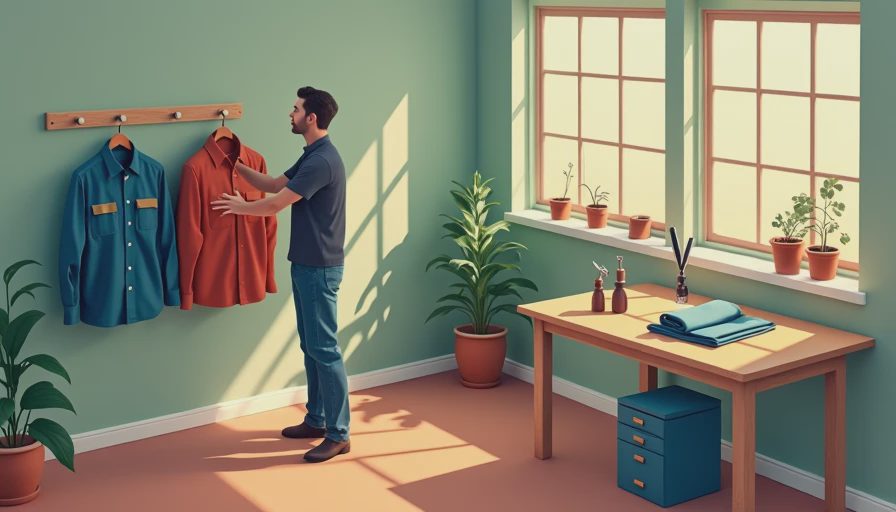
A mens vintage style work shirt with hickory stripes or indigo fading works especially well with straight jeans, railroad denim, or olive chinos. The reason is simple: the shirt already carries the workwear story, so the other pieces only need to support it. If the shirt is thick and boxy, I like pairing it with boots that have a little shape, like Red Wing Iron Rangers, Wolverine 1000 Miles, or vintage-style service boots. If the shirt is lighter, even a clean sneaker can keep it from feeling too heavy.
Color matters more than people think. Brown, navy, faded black, and gray all age well with these shirts. A lighter chore-style shirt can sit nicely under a denim jacket, while a darker version can replace a sweater in cool weather. The goal is contrast, not competition. If every piece in the outfit looks like it came from the same rack, the shirt loses its edge.
Care, repairs, and what to skip
Treat an old work shirt like a favorite tool. Wash it cold, keep the spin cycle gentle, and hang it dry if you want the fades to stay even. High heat can wreck older cotton faster than most people realize. A missing button is easy. A weak seam is easy. Dry rot, thin elbows, and brittle collar points are not easy, and those are the flaws that usually send a shirt back to the rack.
Minor repairs are part of the charm. Replacing a button with a period-appropriate one or cleaning up a loose hem can make a shirt wearable for years. I am less forgiving about bleach damage, moth wear, or a collar that has gone paper-thin. Vintage should look lived in, not fragile.
Where to hunt and what a fair price looks like
A mens vintage style work shirt turns up in all the usual places: thrift stores, estate sales, flea markets, eBay, Etsy, and Depop. In a local thrift shop, a decent one might run $25 to $45. Clean, branded examples from Big Mac, Sears, Lee, or Wrangler often land in the $50 to $90 range when the size and fade are right. Deadstock or unusually crisp examples can climb past $100, especially if the fabric is rare or the tag is a favorite among collectors.
My rule is to pay up when the shirt has both character and patience. Good color, solid seams, and a usable fit are worth more than a bargain with a torn collar. If you can try it on, do it. If you are buying online, measure the chest, shoulders, sleeve, and length against a shirt you already wear often. That one step saves a lot of disappointment and a lot of return shipping.
If you want the easiest path, buy the best cloth you can find and let the rest fall into place. A good shirt should feel like it has already lived a little and still has plenty of miles left. Every stitch has a story.



No letters yet — be the first to write.