The first thing I look at when a vintage shirt comes across the counter is not always the label. Sometimes it is the thread. Studying embroidery styles by decade can tell you when a garment was made, where its designer found inspiration, and whether that floral western shirt is genuinely old or simply made to look old. Every stitch has a story, and the story often starts with the materials.
You do not need a museum archive or a magnifying glass to begin. Look at the colors, the density of the stitching, the subject matter, and the way the decoration sits on the fabric. A loose rayon bowling shirt, a dense wool jacket, and a cotton souvenir shirt will all reveal their eras differently. Here is how I read them.
1920s and 1930s: Art Deco precision and handmade charm
Embroidery from the 1920s often carries the clean geometry of Art Deco. Think stepped diamonds, fans, sunbursts, zigzags, and stylized flowers rather than realistic garden scenes. Metallic gold and silver thread appeared on eveningwear, while silk garments might feature carefully placed motifs at a collar, cuff, or shoulder. The decoration was usually deliberate and balanced, not scattered everywhere.
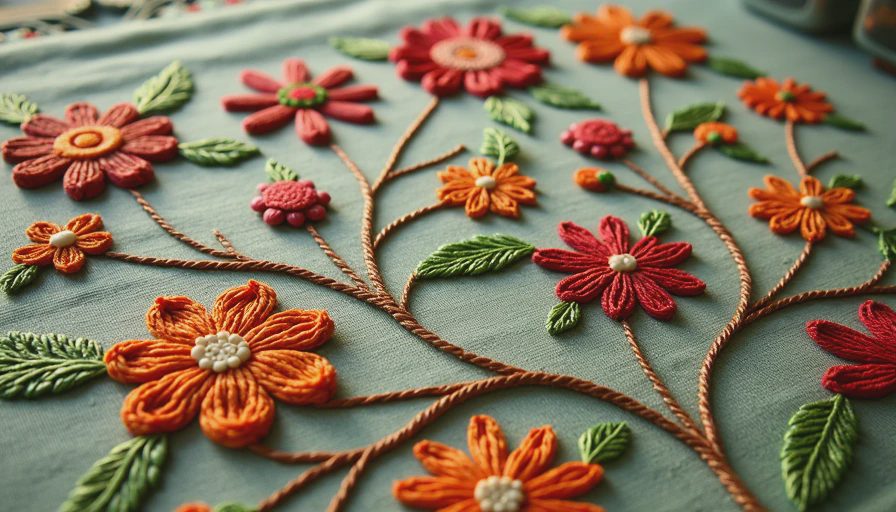
During the Depression-era 1930s, handmade needlework remained important because clothing was often repaired, altered, or embellished at home. Wool sweaters could show small floral details, monograms, or folk-inspired patterns worked in muted rust, cream, forest green, and navy. Thread quality varies widely, so uneven stitches do not automatically mean poor workmanship. In some cases, they are evidence of a careful hand rather than a factory machine.
When shopping, inspect the reverse side. Older hand embroidery may have irregular thread paths and small knots. Machine work will look more uniform, although a skilled embroiderer can blur that distinction. A 1930s-inspired reproduction may copy the motif while using modern polyester thread and a perfectly finished backing.
1940s: Utility, patriotism, and personal marks
The 1940s brought wartime practicality, but that did not make clothing plain. Embroidery styles by decade shift noticeably here toward personal symbols, military references, patriotic motifs, and compact decoration. A denim work jacket might carry a name, aircraft, eagle, or unit-style emblem. A rayon shirt could feature a small embroidered palm tree or a souvenir design picked up during travel.
Because fabric and thread were affected by wartime shortages, color palettes often feel restrained compared with later decades. Cream, red, navy, olive, and black turn up frequently. You will also see embroidery used to personalize uniforms, mechanic shirts, and service garments. The placement matters: a chest emblem or sleeve mark often reflects the original purpose of the shirt.
There is a useful distinction between an original period piece and a later jacket decorated with a vintage-looking patch. Check the garment's seams, zipper, label, and overall wear. A Talon or early Conmar zipper, cotton construction, and naturally softened fabric make a stronger case than an embroidered eagle alone. I once paid too much for a supposedly 1940s jacket because I fell for the patch before checking the zipper. The patch was old. The jacket was not.
1950s: Western shirts, atomic shapes, and polished color
The 1950s are a particularly generous era for embroidered menswear. Western shirts used elaborate yokes, contrasting piping, cowboy imagery, steer heads, horseshoes, boots, cactus, and desert flowers. The embroidery could be paired with pearl-snap closures and pointed pockets, creating a garment that looked sharp enough for a dance hall and durable enough for a pickup bed.
At the same time, atomic-age design brought starbursts, boomerangs, rockets, and abstract lines into casual clothing. Colors became bolder: turquoise with brown, pink with black, mustard with cream, or red against charcoal. Rayon and cotton were both common, and the stitching often had a slightly raised, tactile quality.
One of my favorite dating clues is restraint. A true mid-century shirt may have strong decoration, but the design usually has a clear center of gravity. The collar, chest, and yoke work together. Later novelty shirts sometimes pile on every western symbol at once, with no breathing room. That can still be fun, but it tells a different story.
1960s and 1970s: Folk craft meets counterculture
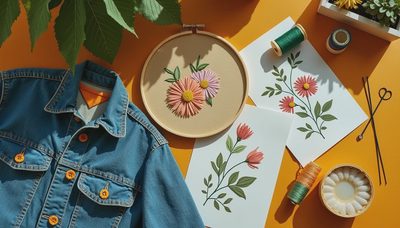
By the 1960s, embroidery styles by decade become more relaxed, handmade, and globally influenced. Peasant blouses, military surplus, denim, and cotton workwear became canvases for flowers, peace symbols, birds, vines, and free-form designs. The stitching might look deliberately imperfect, especially on pieces made or customized at home.
The 1970s expanded that language. Large floral motifs, mushrooms, suns, rainbows, woodland animals, and romantic folk designs appeared on denim jackets, suede vests, cotton shirts, and embroidered jeans. Mexican-inspired, Scandinavian, Native-inspired, and Eastern European motifs were often mixed into the era's craft vocabulary, sometimes thoughtfully and sometimes without much understanding of their origins. It is fair to appreciate the workmanship while acknowledging that not every borrowed motif has a simple history.
For dating, pay attention to scale. Seventies embroidery often wants to be seen from across the room. A tiny chest flower feels more likely to belong to an earlier or later design moment, while a sprawling back panel feels thoroughly 1970s. Polyester thread, warm earth tones, and wide collars strengthen the case but should not be treated as proof by themselves.
1980s and 1990s: Commercial graphics and playful excess
The 1980s favored high contrast, visible branding, and graphic impact. Embroidery appeared on varsity jackets, denim, sweatshirts, polo shirts, and sportswear. Letters became just as important as pictures: school names, team initials, company logos, and oversized slogans. Satin jackets could carry dense patches and chain stitching, while casual garments used bright red, royal blue, emerald, and white.
In the 1990s, embroidery styles by decade move toward novelty and personality. Cartoon animals, Japanese-influenced souvenir motifs, racing graphics, flames, flowers, and abstract tribal-style marks appeared on streetwear and mall clothing. Ralph Lauren, Tommy Hilfiger, Starter, and independent souvenir shops each used embroidery differently, so the label and construction still matter. A small polo pony is not the same historical clue as a large chain-stitched back graphic.
Look for thread sheen and backing. Polyester embroidery thread became common and produces a cleaner, brighter surface than older rayon or cotton examples. Modern reproductions often have crisp embroidery on fabric that has been artificially distressed. Real wear tends to affect the collar, cuffs, seams, and high-contact areas first.
How to date an embroidered vintage garment
Start with the complete garment rather than one attractive motif. Read the label, then inspect the fabric content, stitching, closures, hem, and care tag. A union label can narrow the manufacturing period, while a branded zipper such as Talon, Scovill, Lightning, or YKK provides another useful clue. None of these details should stand alone, but several clues pointing in the same direction are persuasive.
Next, study the embroidery under ordinary light. Dense satin stitching creates a smooth filled area; chain stitch leaves a linked line; cross-stitch has a clear grid; and freehand decorative work can vary from one section to another. Check whether the embroidery was applied before the garment was assembled. If stitching disappears cleanly into a seam, it was likely part of the original production. If it sits awkwardly over a pocket or crosses a finished hem, it may have been added later.
Finally, consider the whole mood. A 1950s western shirt should feel coherent in its collar, snaps, fabric, and decoration. A 1970s denim jacket should show the right proportions and wear pattern. Embroidery styles by decade are best understood as a group of clues, not a rigid checklist.
Wearing vintage embroidery without looking like a costume
Let the embroidered piece be the loudest part of the outfit. Pair a western shirt with plain denim and simple leather shoes, or wear a floral 1970s jacket over a solid tee and relaxed trousers. Avoid matching every color in the embroidery; one quiet connection is enough. If the garment is oversized, balance it with a cleaner lower half rather than adding another dramatic layer.
Fit matters more than the year on the tag. A shirt with beautiful chain stitching will not look good if the shoulders restrict movement or the collar fights your proportions. Tailoring can help with side seams and sleeves, but do not assume every vintage item can be altered easily. Embroidery near a seam limits what a tailor can safely remove.
That is the pleasure of learning embroidery styles by decade: you stop seeing decoration as random surface detail. You start noticing the hands, machines, materials, and cultural moments behind it. Buy the piece that has a convincing construction story, wear it often, and let the next owner wonder where you found it. Every stitch has a story.


No letters yet — be the first to write.