1935 fashion sits in a particularly good place between the severe geometry of the early 1930s and the polished glamour that would define the later decade. It was practical, shaped, and quietly dramatic. A man could wear a high-waisted trouser with a broad jacket and look ready for a train platform; a woman could wear a bias-cut dress that moved like water without appearing overdressed for an afternoon errand. The trick today is borrowing the era's language without dressing for a historical reenactment.
When I am sorting a rack at The Vault in Savannah, I look for the details that make 1935 fashion feel lived-in rather than theatrical: a generous trouser rise, a substantial wool, a working cuff, a horn button, or a zipper that has survived nine decades. Every stitch has a story, and the best pieces leave room for your own chapter.
What Defined 1935 Fashion
The silhouette did most of the talking. Menswear favored a longer jacket with padded or naturally broad shoulders, a nipped waist, and trousers that sat high on the natural waist. Pleats were common, cuffs were useful, and legs were generally fuller than the slim trousers found in many modern stores. A double-breasted jacket could look imposing, but a single-breasted sack-inspired coat offered an easier entry point.
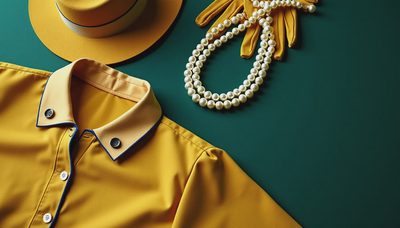
Fabrics were sturdy and tactile. Tweed, flannel, cavalry twill, gabardine, and tropical wool all appeared in wardrobes, depending on season and budget. Brown, charcoal, navy, olive, and warm gray formed the foundation, while rust, mustard, burgundy, and muted blue supplied personality. In 1935 fashion, color was often controlled by texture: a flecked Donegal-style wool could do more work than a loud pattern.
For women, the line was softer but still deliberate. Dresses often emphasized the natural waist, with skirts falling below the knee and sleeves shaped for movement. Rayon crepe and satin gave evening clothes their liquid drape, while wool and cotton handled daytime wear. Art Deco influence remained visible in jewelry, collars, buttons, and geometric prints, though the overall look was less rigid than the previous decade's styles.

Building a Wearable 1935-Inspired Outfit
Start with one period-specific anchor, then let modern basics keep the outfit grounded. For example, try high-rise gray trousers with a plain white oxford shirt, a navy cardigan, and a pair of brown leather derbies. Add a vintage tie only if the proportions feel right. That combination respects 1935 fashion without asking anyone to believe you just stepped out of a black-and-white film.
A sportier option is a checked wool jacket over a knit polo or crew-neck sweater. Look for a jacket with a longer body and fuller sleeve rather than chasing an exact reproduction. Brands such as Pendleton, L.L.Bean, and older Brooks Brothers pieces can offer useful texture, although the label matters less than the cloth and construction. A 1940s jacket can also work beautifully because silhouettes did not change at midnight on January 1.
For a feminine interpretation, pair a knee-length rayon dress with low-heeled leather pumps and a cropped cardigan. A simple belt can establish the waist without forcing an exaggerated shape. Men and women can both use accessories to suggest the period: a silk scarf, a modest watch, a felt hat, saddle shoes, or a leather belt with a restrained buckle. One or two signals are usually enough.
The important question is whether the clothes suit the person wearing them. Vintage should accommodate a real body, not demand that someone become a mannequin. Tailoring can adjust a waistband, sleeve, or hem, but it cannot make an uncomfortable garment worth keeping. I once bought a beautiful 1930s-inspired jacket with immaculate lining and a perfect Talon zipper. The shoulders were wrong for me, and I spent six months pretending they were not. They were. The jacket went to a better home.
How to Identify Genuine Period Details
Dating vintage clothing requires several clues working together. A label can help, but it is not a birth certificate. Examine the fabric, seam finishes, button material, stitching, and hardware. Metal zippers from Talon, Crown, and early Conmar production can point toward an older garment, though replacement hardware is common. A zipper alone never proves a date.
Union labels are useful context. Older labels from organizations such as the Amalgamated Clothing Workers of America can narrow a garment's timeline, while a retailer label may reveal where it was sold rather than who made it. Check the inside carefully for hand-finished details, selvedge edges, chain stitching, and natural-fiber lining. Rayon, wool, cotton, and silk were widespread; synthetic blends became more common later.
Construction can separate a genuine old garment from a modern reproduction. Look for generous seam allowances, trouser suspender buttons, a high waistband, hand-set sleeves, and practical pockets. None of these details stands alone, but together they create a persuasive picture. Reproductions from companies such as The Real McCoy's, Bronson Mfg., or bespoke makers can be excellent, yet they should be judged as modern interpretations rather than misrepresented as antiques.

Shopping for 1935 Fashion on a Realistic Budget
A complete vintage wardrobe is not required, and it can become expensive quickly. At flea markets and thrift stores, ordinary wool trousers may cost $25 to $60, while a strong vintage jacket often lands between $75 and $200. Rare eveningwear, excellent tailoring, or a documented designer piece can run considerably higher. Start with the garment you will wear twice a month, not the one that photographs best under a shop's bright lights.
Inspect every purchase for moth damage, odor, brittle elastic, missing buttons, and fragile lining. Hold wool near a window and look for tiny weak spots. Test pockets and zippers gently. A $40 pair of trousers can become a $100 project after cleaning, waistband work, and zipper replacement. That is not automatically a bad deal, but the repair should be part of the decision before money changes hands.
Vintage marketplaces, estate sales, and menswear resale shops are useful hunting grounds. Search terms such as “high-waisted wool trousers,” “1930s rayon dress,” or “gabardine sport coat” usually produce better results than searching only for 1935 fashion, since sellers often date garments loosely. Ask for measurements, especially the pit-to-pit, shoulder, sleeve, rise, thigh, and hem. Tagged sizes from the period have little relationship to today's sizing.
A Simple Way to Wear the Look Today
Think in proportions rather than costumes. High-rise trousers with a tucked shirt change the entire line of an outfit. A jacket that ends around the hip can create balance, while a modern sneaker may deliberately keep the result relaxed. Avoid combining every recognizable detail at once: a wide-brim hat, two-tone shoes, watch chain, vest, tie pin, and contrast trousers can overwhelm even excellent clothing.
For everyday 1935 fashion, begin with texture. Try flannel trousers, a cotton shirt, a Shetland sweater, and plain leather shoes. In warm Southern weather, swap the flannel for tropical wool or linen and choose an unstructured jacket. A woman might combine a vintage dress with contemporary boots, or wear a period blouse with straight-leg denim. The mix is what makes the clothes feel inhabited.
Fit remains the final judge. The jacket should close without pulling, trousers should sit securely without crushing the waist, and sleeves should allow ordinary movement. A little alteration is welcome; a garment that requires constant adjustment is not. Photograph yourself from the side before leaving the house. It is an unglamorous but useful test, and it has saved me from more than one optimistic mirror decision.
Why the Era Still Works
The appeal of 1935 fashion is not nostalgia for a perfect past. It is the pleasure of clothes made with intention: wool that has weight, buttons that feel like objects, and tailoring that gives the body a clear shape. Those qualities remain useful whether you found the garment in a dusty rack, inherited it from family, or bought a careful reproduction.
Choose one good piece, learn its construction, and wear it often enough to give it new evidence. Pair old trousers with a current shirt. Let a vintage dress share a closet with canvas sneakers. The goal is not to look preserved behind glass. It is to make the past useful in the present. Every stitch has a story, and the best version of 1935 fashion is the one that eventually carries yours.


No letters yet — be the first to write.