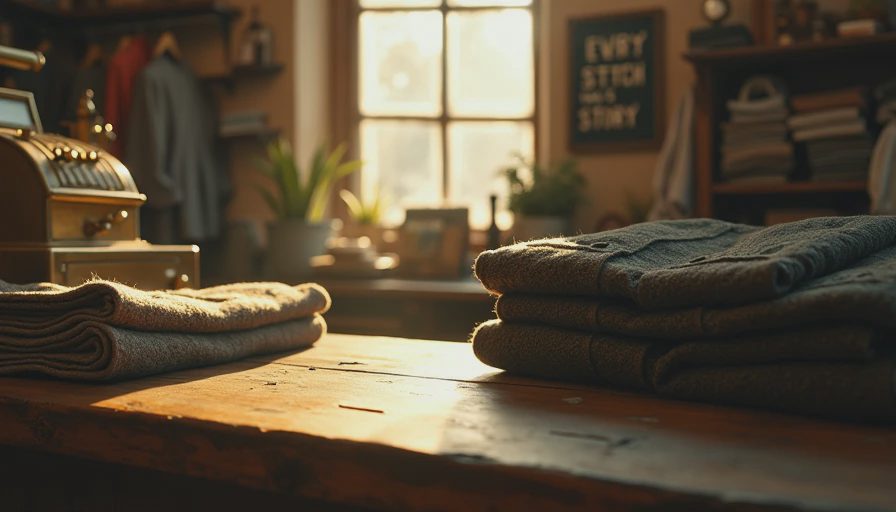
I spent eight years in a fluorescent-lit office in Manhattan, staring at spec sheets that told me exactly how many stitches per inch a factory in Vietnam was supposed to sew on a pair of chinos. I knew the weight of the twill, the tensile strength of the thread, and the acceptable variance on a quarter-inch seam allowance. I could tell you what a "fullness" measurement meant and why a 7.5-inch rise was the industry standard for a certain silhouette.
What I couldn't tell you was why any of it mattered — not really.
Not in the way that matters when you're standing in front of a rack at a flea market at 7:00 AM, your coffee going cold, and your fingers brush against a piece of fabric that stops you cold. Not the way it matters when you pull out a jacket and realize it's been waiting for you since 1963.
That's the thing about vintage. It doesn't come with a spec sheet. It comes with a history.
What This Blog Is Not
Let's get the disclaimers out of the way early, because I've read enough fashion blogs to know what you're probably expecting — and I'm not interested in writing any of it.
This is not a "shop my links" roundup. You won't find affiliate-laden posts about the "10 essential pieces every man must own." I'm not going to tell you that you need a navy blazer, a white oxford, and a pair of raw denim jeans to be a properly dressed adult. That's not how style works, and it's certainly not how vintage works.
This is not a fast-fashion blog. I'm not going to tell you about the "thrift flip" that turns a $5 Goodwill sweater into a $200 TikTok trend. I'm not here to chase algorithms or manufacture content for the sake of a posting schedule.
And this is definitely not a gatekeeping blog. If you're new to vintage and feel a little lost — like you're not sure what you're looking for or whether you even belong in a vintage shop — this is the blog for you. The only thing I'm here to gatekeep is bad stitching and overpriced polyester.
What This Blog Actually Is
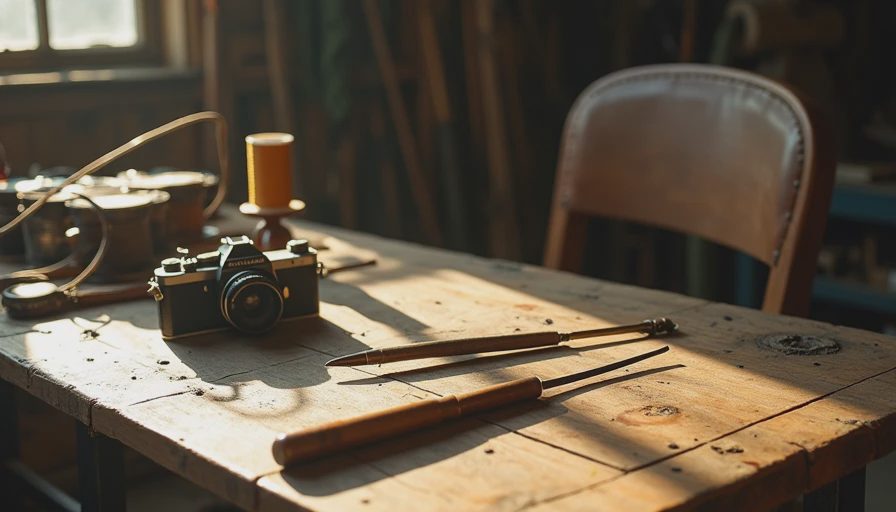
This is a blog about the hunt. The slow, patient, occasionally disappointing, sometimes euphoric search for clothes that have lived a life before they meet you.
This is a blog about quality — not the kind that comes from a marketing department, but the kind you can feel in your hands. The weight of a 1970s wool overcoat. The crispness of a deadstock seersucker that's been folded in a drawer since before you were born. The sound a good brass zipper makes when you pull it for the first time in forty years.
This is a blog about knowing what you're looking at. I've handled thousands of garments over the last decade. I've learned to date a piece by the shape of its pocket, the font on its label, the exact shade of its union tag, the way the thread frays at the cuff. Those are the skills I want to share — not because I think you need to become a vintage detective, but because knowing what you're buying makes the whole experience better.
And this is a blog about the story. Every piece I buy has one. The 1973 Brooks Brothers tweed jacket that taught me more about construction than any spec sheet ever did. The 1960s Pendleton board shirt I found for $12 at a flea market that became my most-worn piece of clothing. The seersucker suit that led me down a research rabbit hole to a defunct menswear shop in Macon, Georgia.
I want to tell those stories. And I want to help you find yours.
The Man Behind the Counter
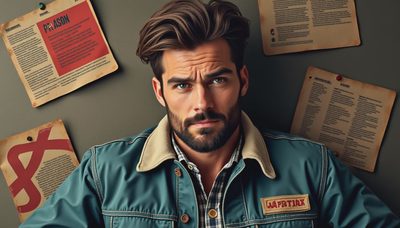
My name is Jasper Winslow. I'm 36 years old, and I live in Savannah, Georgia, in a renovated 1920s craftsman bungalow in the Starland neighborhood with my wife Rachel, our four-year-old daughter Ivy, and a retired greyhound named Scout.
I spent eight years in men's fashion buying at J.Crew's New York office. I started as a buying assistant, spent five years learning the ropes, and eventually worked directly with mills and manufacturers as a buyer's assistant. I read spec sheets the way other people read novels. I could tell you the difference between a Portuguese flannel and an Italian one by touch. I knew the manufacturing calendar better than I knew my own social schedule.
In 2019, I did what a lot of burnt-out retail people only talk about: I quit. I packed up my life in New York, moved south to Savannah, and started over.
Now I'm the purchasing manager at The Vault, a vintage boutique in Savannah's Starland district. I spend my days sourcing pieces for the shop, curating a small online vintage store on the side, and handling thousands of garments a year. I've dated more pieces than I can count. I've learned to spot a reproduction from fifty feet away. I've made mistakes — overpaid for things that weren't worth it, passed on things that I still think about years later.
And through all of it, I've become convinced of one thing: the best clothes come with a history, a good zipper, and a story to tell.
Why Southern Vintage Matters
Most vintage content you'll find online comes from New York or Los Angeles. That's not a criticism — those cities have incredible vintage scenes, and I've learned a lot from writers and dealers based there. But they don't tell the whole story.
The South has its own vintage DNA. The climate means different fabrics, different weights, different storage challenges. The cultural history is different — the influence of prep and workwear and Southern Gothic all mixing together in a way you don't see elsewhere. The flea markets are different. The thrift stores are different. Even the estate sales have a distinct flavor.
I want to bring that perspective to the conversation. Not because it's better, but because it's different — and because there are a lot of people in the South (or people who wish they were) who are looking for vintage guidance that speaks to their context, not just the coastal editorial vision.
Who This Blog Is For
This blog is for men in their late 20s to early 40s who are tired of fast fashion. Who are curious about building a wardrobe with personality, but don't know where to start. Who want guidance on finding, identifying, and wearing vintage pieces without looking like they wandered out of a costume party.
It's also for women who cross-shop menswear and vintage. I'm writing from a menswear-anchored perspective, but vintage is for everyone, and I'm not interested in building fences.
If you spend too much time on r/ThriftStoreHauls and r/VintageClothing, this is for you. If you read Put This On and Die Workwear and want something with a slightly slower, warmer pace, this is for you. If you follow vintage sellers on Instagram and Depop and wish you knew how they spot the good stuff, this is for you.
And if you've never bought a vintage piece in your life and feel a little intimidated — this is especially for you.
What You'll Find Here
I've organized the blog into five categories, each with its own rhythm and focus.
The Dig is my weekly thrift report — flea market walkthroughs, haul breakdowns, and the ongoing log of the hunt. I'll tell you what I found, what I passed on, and why. This is the thrill-of-the-find category, and it's where I share the raw, unedited excitement of the chase.
The Archive is the forensic category. Deep dives on specific vintage pieces, brand histories, and era-identification guides. How to read a vintage tag like a detective. What makes a 1970s Levi's different from a 1980s pair. This is where I geek out on the details.
Fit & Fabric is about construction literacy. How to assess quality at a glance. How to date clothes by zipper hardware and material shifts. How to shop online vintage when you can't touch the fabric. This is the practical, actionable stuff that will make you a better shopper immediately.
Worn In is the why-it-matters category. Style philosophy, outfit builds, mixing old with new, personal essays. This is where I think about the bigger picture — why slow fashion matters, why you can wear that vintage blazer to the office, and what a four-year-old can teach you about dressing without rules.
The Shop Counter is the behind-the-scenes category. Sourcing trips, pricing philosophy, customer stories, and the economics of secondhand. This is where I talk about running a vintage business — and where I share the things I learned from eight years in corporate retail that I still use today.
The Philosophy in One Phrase
"Every stitch has a story."
I use that phrase a lot, and I mean it every time. It's not just a tagline. It's the organizing principle of how I think about clothes, how I buy them, and how I want to write about them.
When I pick up a vintage jacket, I'm not just holding a garment. I'm holding the choices of the person who designed it, the skill of the person who sewed it, the taste of the person who bought it, and the life of the person who wore it. All of those things are stitched into the fabric, visible if you know how to look.
I want to help you learn how to look.
No Intimidation, No Gatekeeping
One of the things I hate most about fashion culture — vintage or otherwise — is the way it makes people feel like they don't belong. Like you need a certain budget, a certain body type, a certain level of knowledge to participate.
That's nonsense.
You don't need to spend a lot of money to dress well. You don't need to be a particular size. You don't need to know the history of every single brand or the exact decade of every single garment.
All you need is curiosity. A willingness to look. A readiness to try something on and see how it feels.
That's what I want this blog to be: a place where curiosity is welcome, questions are celebrated, and nobody gets made to feel like they don't belong.
The First Post and What Comes Next
This is the first post, and it's intentionally broad. I wanted to lay out the vision, the philosophy, and the person behind the blog before we get into the specifics.
Over the next few weeks, I'll be publishing the rest of the launch sequence:
The Savannah Thrift Guide — where to start when you don't know where to start
How to Read a Vintage Tag Like a Detective — union labels, RN numbers, and what they reveal
The One Jacket That Taught Me Everything About Buying Vintage — the 1973 Brooks Brothers tweed that humbled me
Five Things I Learned from Eight Years at J.Crew (That I Still Use)
And more — all the way through to the twentieth post
If you're new to vintage, start with the Savannah Thrift Guide. If you're already deep in the hunt, maybe jump straight to the tag-reading guide or the Levi's deep dive.
Or just read along in order. I've designed the sequence to build from the general to the specific, from the emotional to the technical. But there are no rules. Skip around. Find what speaks to you.
That's how vintage shopping works, anyway.
Let's Get Started
If you've made it this far, thank you. Thank you for reading, for being curious, for giving this new blog a chance.
I started this project because I believe in the power of slow, deliberate shopping. I believe in the value of clothes that have lived a life before you met them. I believe that the best wardrobe is one that tells a story — not just about fashion, but about you.
And I believe that every stitch has a story.
Mine starts here. Yours is still being written. Let's find it together.
No letters yet — be the first to write.